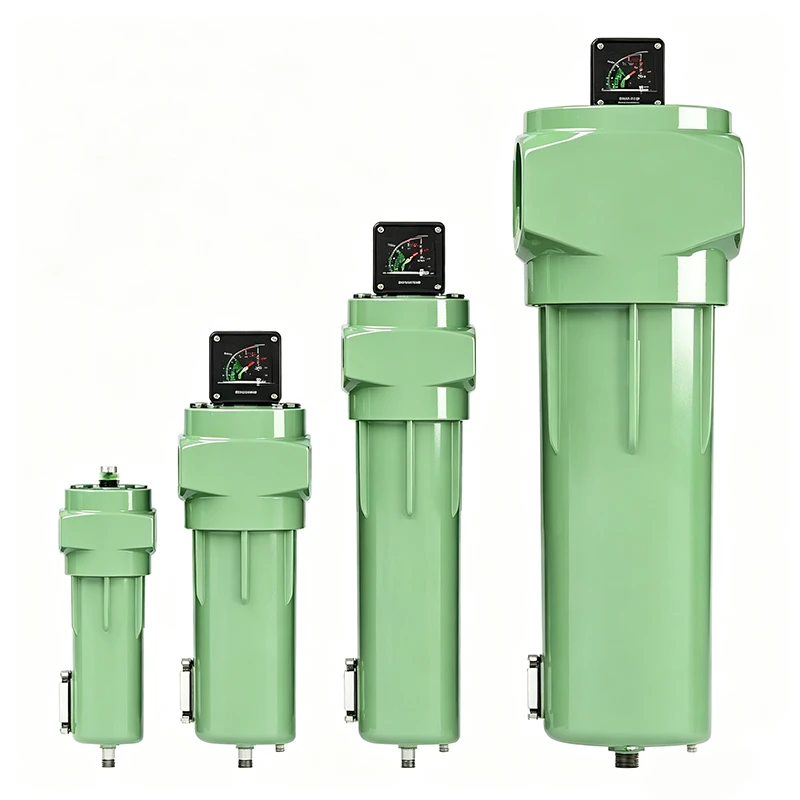
Primary Indicator: Differential Pressure/Resistance (Most Direct and Reliable)
Differential Pressure Alarm: For elements equipped with a differential pressure indicator, immediate replacement is required if the needle enters the red zone (typically ≥0.5–1.0 bar) or if an electronic differential pressure transmitter triggers an alarm. High-pressure filters often have a threshold of 0.5 MPa; reaching this value triggers a switch signal indicating a blockage.
Relative Increase in Differential Pressure: In the absence of an alarm device, monitor the inlet-to-outlet differential pressure. If the actual differential pressure increases by 50%–100% compared to the initial operating differential pressure (typically ≤0.1–0.3 MPa), it indicates a significant accumulation of impurities and necessitates replacement.
Abnormal Differential Pressure Fluctuations: Erratic pressure fluctuations during operation likely indicate partial blockage or damage to the filter element, requiring disassembly and inspection. A sudden drop in differential pressure to near zero indicates filter media failure (rupture), requiring an emergency shutdown and immediate replacement.
Resistance Threshold: For primary ventilation filters, the initial resistance is typically 50–70 Pa; replacement is mandatory when the operating resistance reaches twice the initial resistance value.
Visual Indicators: Flow Rate Changes
Assuming inlet pressure/gas intake pressure, medium viscosity, and other conditions remain constant:
If the outlet flow rate drops by more than 20%–30% from the initial value and fails to meet process flow requirements, it indicates severe blockage and necessitates replacement.
Fluctuating flow rates accompanied by system pressure instability likely indicate partial filter element blockage or poor sealing; differential pressure monitoring should be used to confirm the need for replacement.
If an automatic water filter undergoes frequent backwashing (more than six times daily) yet the differential pressure remains high, the filter element has reached saturation and requires replacement.
Core Criterion: Failure of Filtration Performance
Professional Testing: The filter element is considered failed if post-filtration indicators-such as impurity levels or suspended solids in liquids-exceed usage standards, or if gas filtration results show oil mist concentrations >0.01 PPM or dust particle sizes that fail to meet specifications. Sensory assessment: Immediate replacement is required if, after filtration, the liquid exhibits abnormal color, odor, or visible turbidity/impurities, or if the gas retains an oily smell and impurity deposits appear inside downstream equipment.
If downstream equipment shows abnormal wear or product cleanliness fails to meet standards, and other faults have been ruled out, the primary conclusion should be that the filter element has failed and requires replacement.